


Trigger warning: This article references child abuse and sexual violence.
Metal Ink exists to document harm, preserve public record, and pursue accountability without spectacle. That means holding space for survivors while maintaining evidentiary discipline — even when the material is disturbing, incomplete, or emotionally charged.
This article concerns Sascha Riley, a survivor whose testimony has drawn widespread attention and serious concern.
What Sascha Has Described
Sascha has publicly described severe abuse beginning in childhood, including sexual violence, coercion, and trafficking. The harm described is profound. No reasonable reading of Sascha’s testimony dismisses that suffering.
Survivors do not owe the public perfection, linear memory, or documentation. Trauma fractures time, recall, and narrative coherence. That truth is well-established.
At the same time, Metal Ink’s role is not belief or disbelief — it is verification.
What Has Been Verified — and What Has Not
Journalist Ellie Leonard conducted extensive investigative work examining Sascha’s claims. Her reporting relied on public records, court documents, genealogy research, law-enforcement files, and direct correspondence.
Leonard’s findings establish several verifiable facts, including:
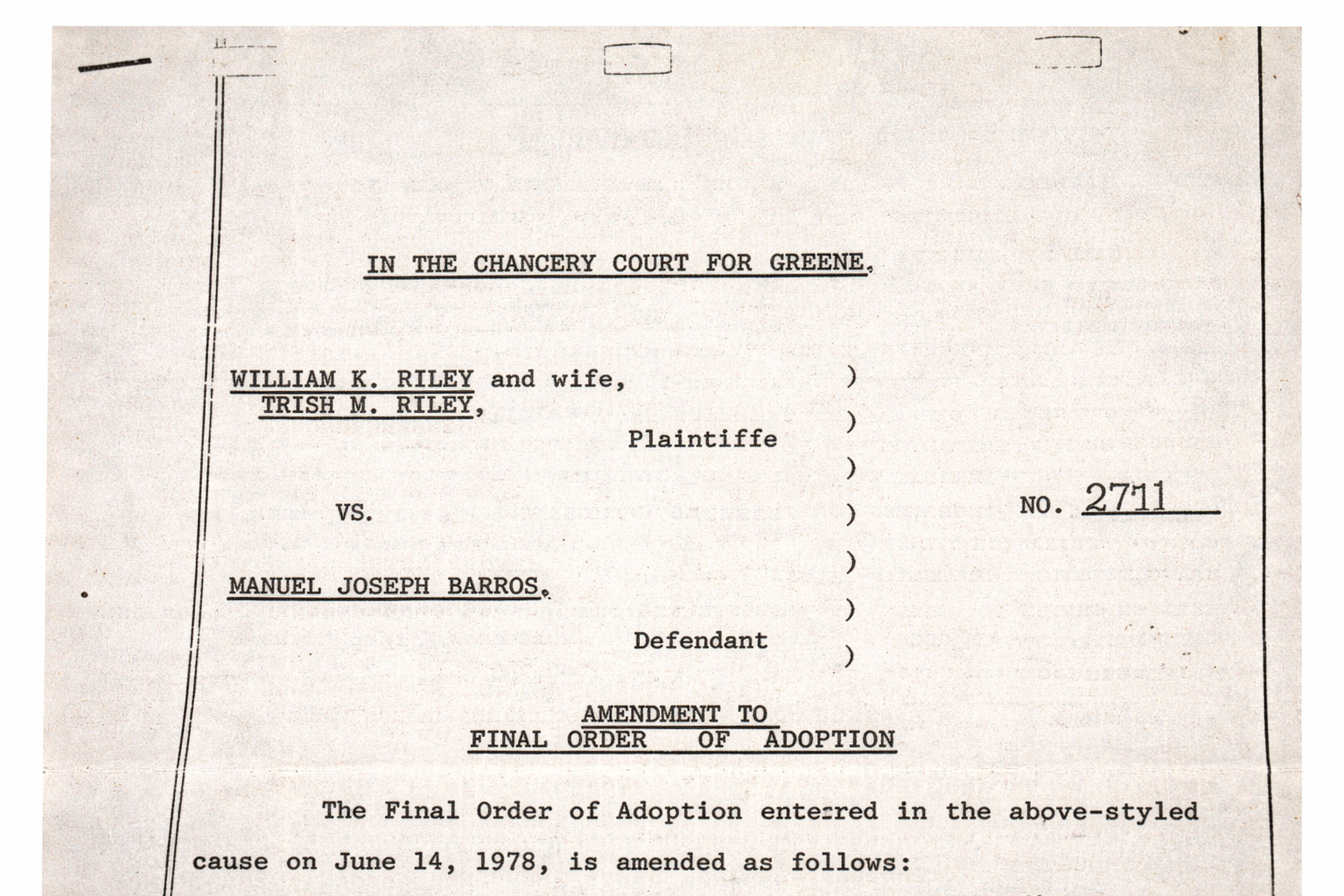
Adoption records confirming Sascha’s identity and early custodial history
The existence and background of individuals named in Sascha’s testimony
Documented links between some named figures and known trafficking investigations
They also identify critical gaps:
Certain allegations could not be corroborated through available records
Some timelines and locations conflict with verified documentation
Key claims lack independent evidence at this time
Leonard does not conclude that Sascha fabricated abuse. She concludes — carefully — that specific claims cannot yet be verified.
Her full reporting is available here:
👉 My Findings on Sascha Riley, by Ellie Leonard
Why This Distinction Matters
False certainty — in either direction — causes harm.
Unverified claims, when amplified without scrutiny, can:
Endanger survivors
Undermine future accountability efforts
Be weaponized to discredit proven victims
Conversely, dismissing testimony because it is incomplete or fragmented replicates the very systems that silence survivors.
Metal Ink rejects both failures.
The Work Going Forward
This case is not closed.
Metal Ink’s commitment is to:
Preserve verified records and source material
Track newly emerging documentation
Distinguish clearly between corroborated facts and unresolved claims
Protect survivors from exploitation, distortion, and erasure
Accountability is not a moment. It is a process.
Why Support Matters
This work requires time, access to records, and sustained labor. It is slow by design — because accuracy matters more than speed.
Support the continued documentation, verification, and accountability work behind reporting like this.
Accountability Does Not End With One Case
Whether this case advances, stalls, or closes without resolution, the work of accountability does not end here.
Survivors come forward in systems that are structurally hostile to truth. Records are missing. Institutions fail. Timelines fracture. None of that negates harm — and none of it absolves the systems that allow abuse to persist.
Accountability is not a verdict. It is a process.
That process includes preserving public records, examining institutional failures, and continuing to document patterns of harm — even when individual cases cannot carry the full weight of proof.
Metal Ink will continue this work without spectacle, without certainty theater, and without abandoning survivors simply because the record is incomplete.
Silence, erasure, and institutional failure are themselves forms of harm — and they demand accountability.